


Guard partner

Gutters & Gutter Guards · Fabricated On-Site
Gutter guard partners · Made on-site
 Learn more
6″ K-style aluminumFabricated on-site
Learn more
6″ K-style aluminumFabricated on-site
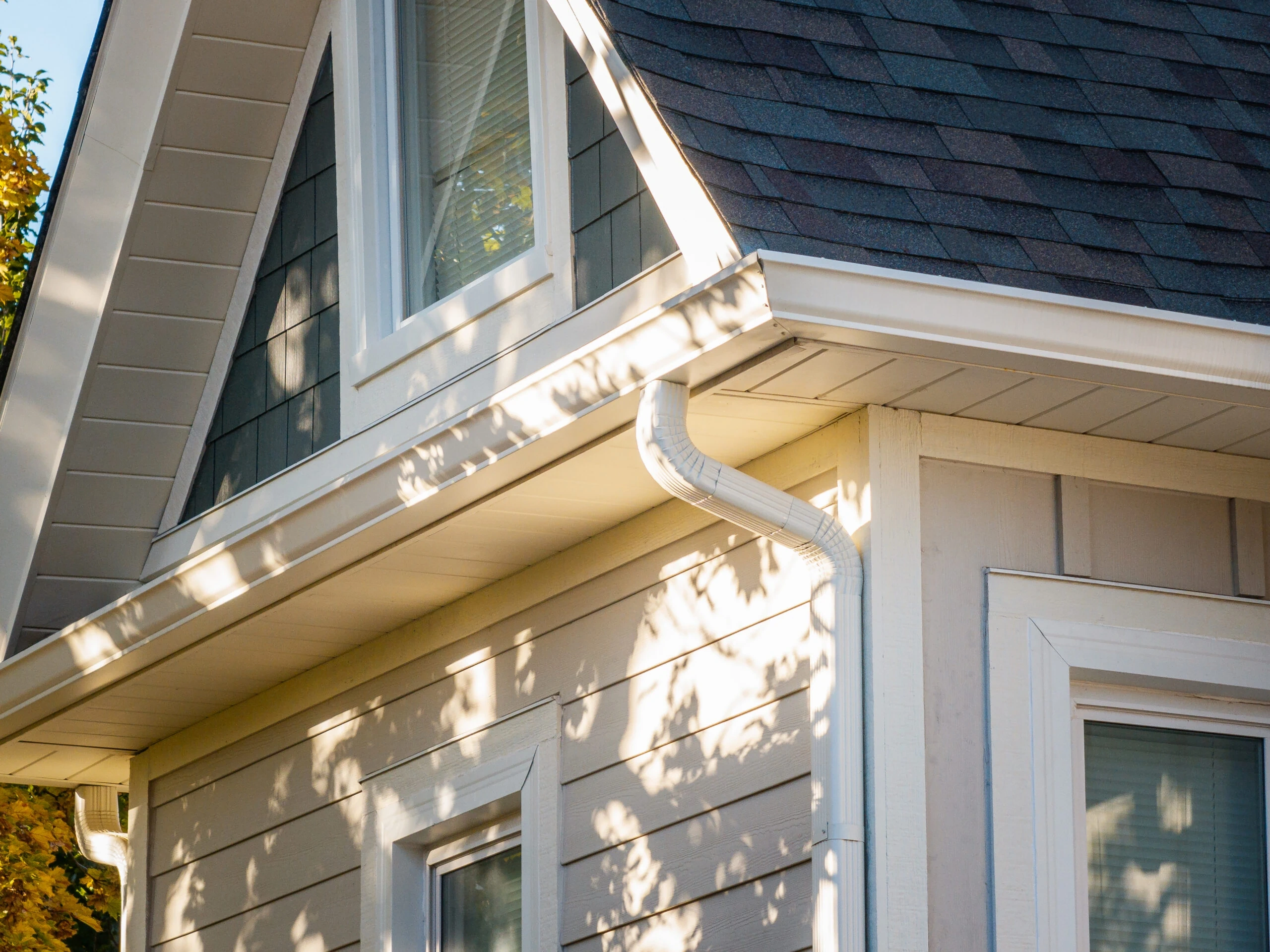
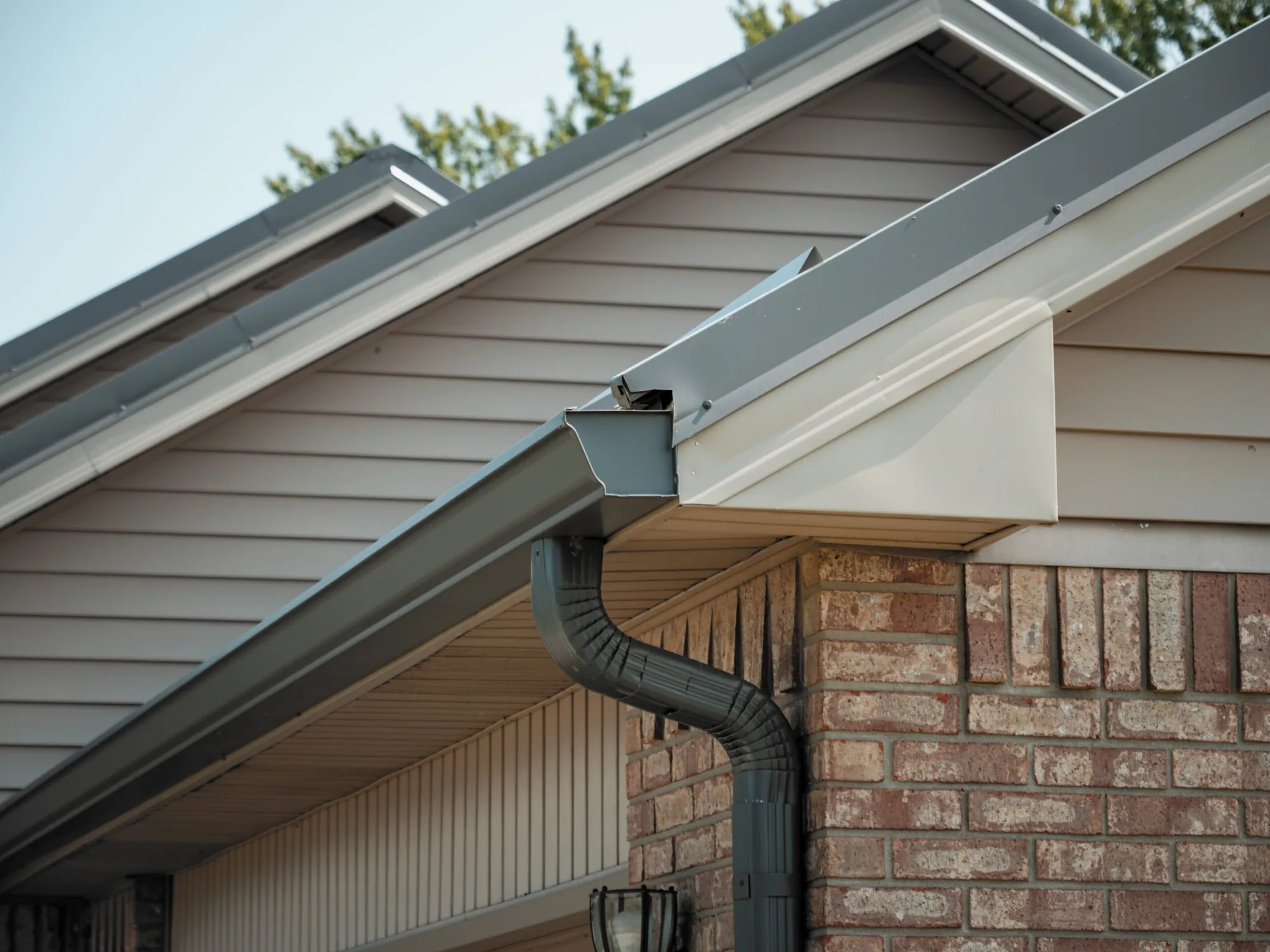
What is a 6-inch K-style aluminum gutter?
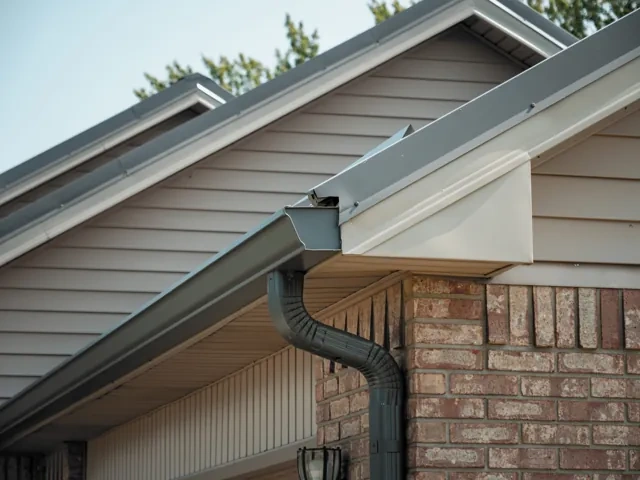
A 6-inch K-style aluminum gutter is a nominal six-inch rain channel with a flat back and a shaped outer face. Straight runs are commonly roll-formed from aluminum coil at the jobsite so they can be installed without intermediate seams.
Pros
A six-inch profile generally provides more carrying capacity than a comparable five-inch residential gutter. That extra volume can be useful below larger roof areas, steep slopes, and valleys that concentrate water in one location.
On-site fabrication allows long straight runs to be made continuously. Fewer seams mean fewer potential leak and movement points, although corners, end caps, outlets, and transitions still require joints.
Aluminum is light, formable, and corrosion-resistant in normal residential exposure. It is available in many factory-finished colors and can be coordinated with fascia, roofing, trim, and downspouts.
Cons
A larger trough cannot compensate for too few outlets, undersized downspouts, incorrect slope, or poor discharge. The roof drainage area and concentrated valley flow still need to be evaluated.
Aluminum expands and contracts and can dent from ladders, branches, ice, or impact. Long runs, corners, hangers, and fastening patterns need to account for movement and expected loads.
The gutter is only as secure as the fascia and the attachment behind it. Rotted fascia, weak rafter tails, missing drip-edge integration, and bad roof runoff should be corrected before the new gutter is treated as finished work.
6-inch K-style aluminum gutter (n.)
Six-inch aluminum trough installed beneath the eaves to collect roof runoff and deliver it to outlets and downspouts. The K-style profile has a flat back and shaped outer face; when made on-site from coil stock, each straight run can be formed continuously to reduce joints. Gutter has meant a rainwater channel at an eave since the 14th century, while aluminum was named in the early 1800s.
 Learn more
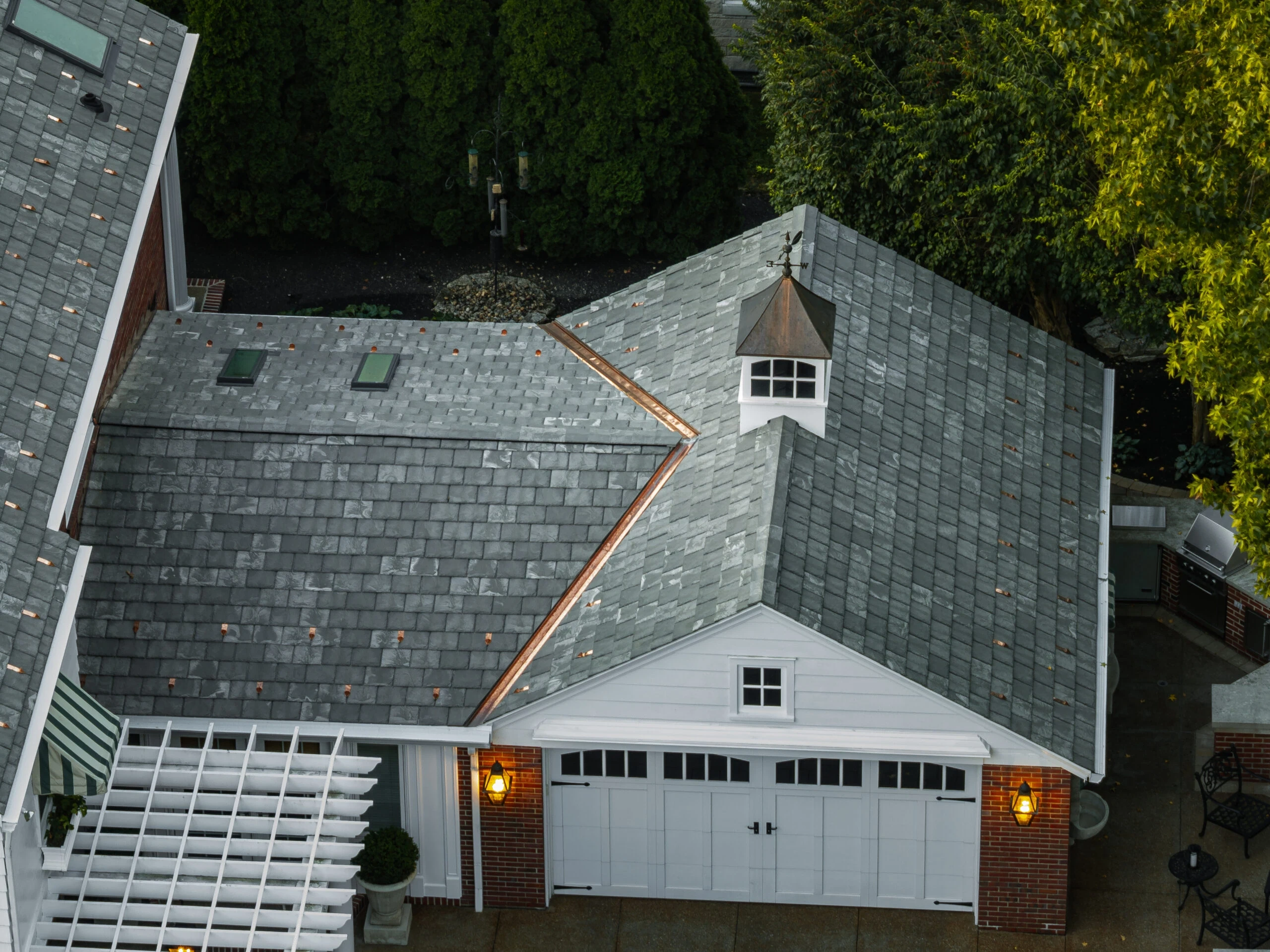
Half-round copperExposed profile
Learn more
Half-round copperExposed profile
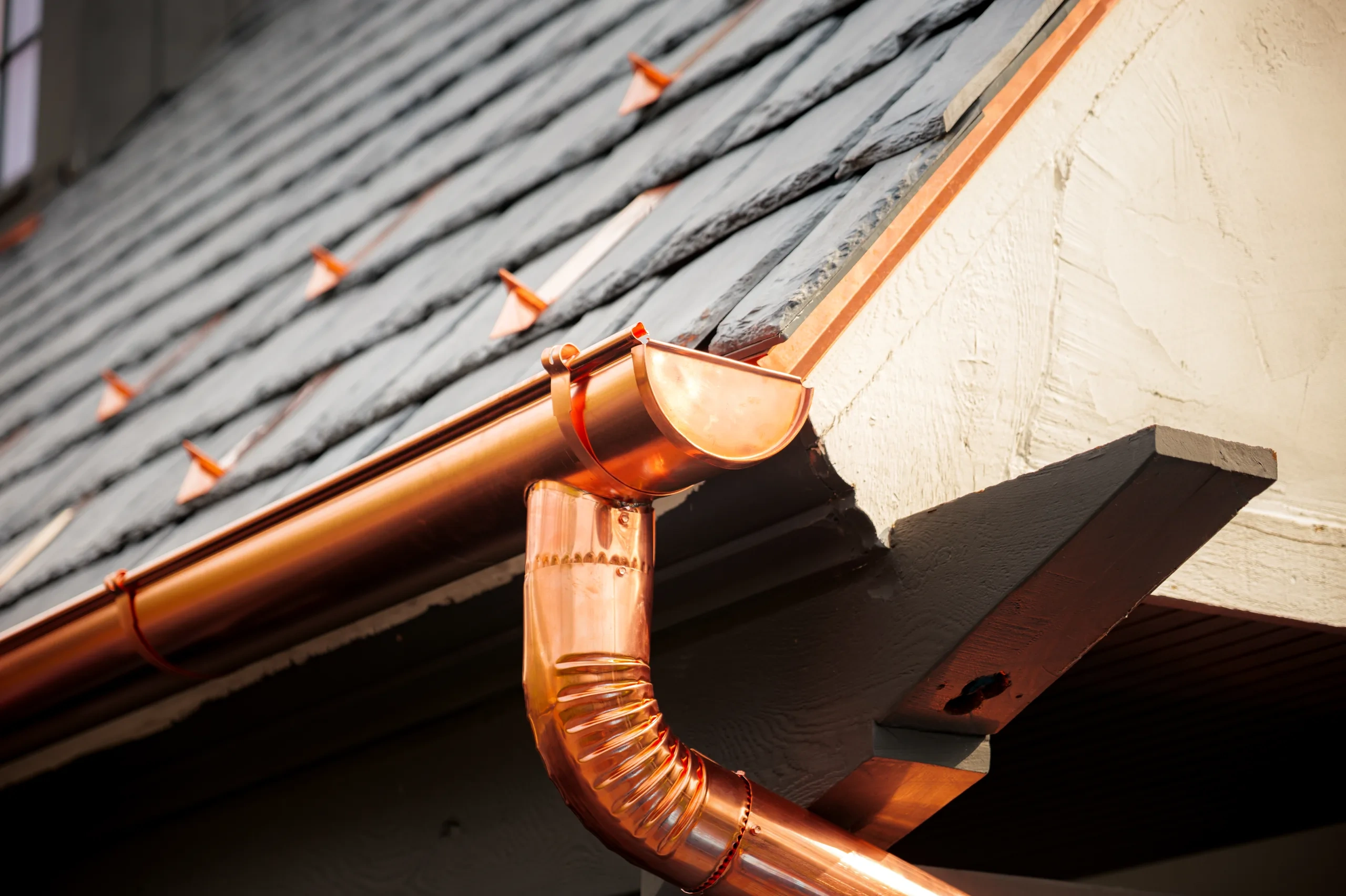
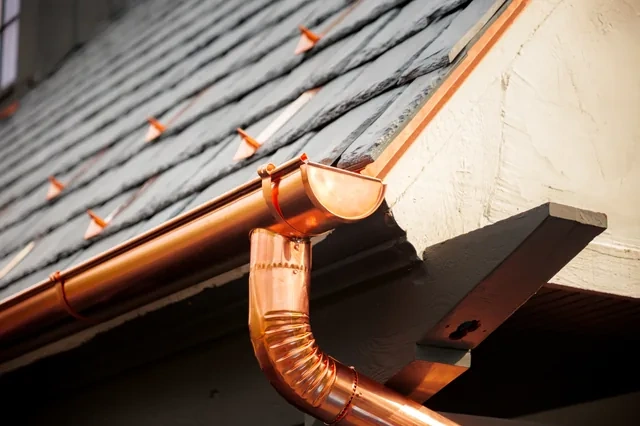
What is a half-round copper gutter?
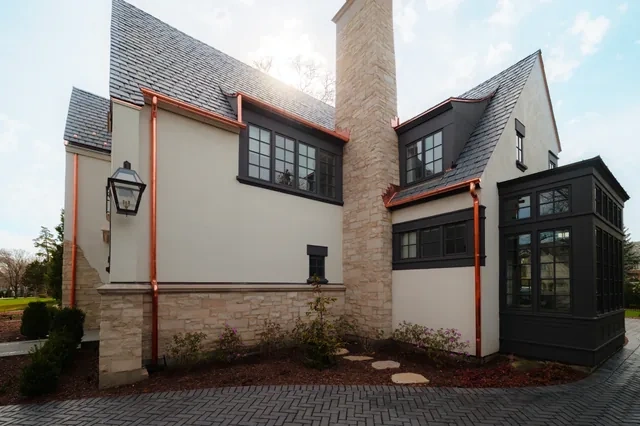
A half-round copper gutter is a semicircular copper trough supported by exposed or concealed hangers. Its shape, metal, joints, and downspouts are usually intended to be visible parts of the architecture.
Pros
Copper can be formed, soldered, and fabricated into custom gutters, outlets, conductor heads, and downspouts. This makes it especially useful on slate, cedar, masonry, historic, and other high-detail homes.
The material does not rely on a painted finish. It weathers from bright copper through brown tones and may eventually develop a blue-green patina, depending on the environment.
Half-round gutters have a clean, traditional profile with an open interior that is straightforward to inspect. When the system is correctly sized and detailed, it can combine drainage and architectural metalwork in one assembly.
Cons
Copper material and labor cost substantially more than standard aluminum. Hangers, joints, outlets, end conditions, expansion provisions, and downspouts need to be specified as a complete system.
Copper expands and contracts. Long runs require appropriate joints, hangers, locks, and movement details instead of being rigidly fastened from end to end.
Runoff can stain light masonry, stone, roofing, and paving. Copper can also react with incompatible metals, so fasteners, adjacent flashings, upstream runoff, sealants, and underground connections must be checked.
half-round copper gutter (n.)
Semicircular copper rain channel whose exposed profile is part of the architecture, not merely a drainage component. Half-round describes the shape directly: a circular trough cut in half. Copper takes its name from Cyprus, a historic source of the metal, and it changes color as it weathers—so joints, hangers, outlets, and adjacent metals must be specified as a complete system.
 Learn more
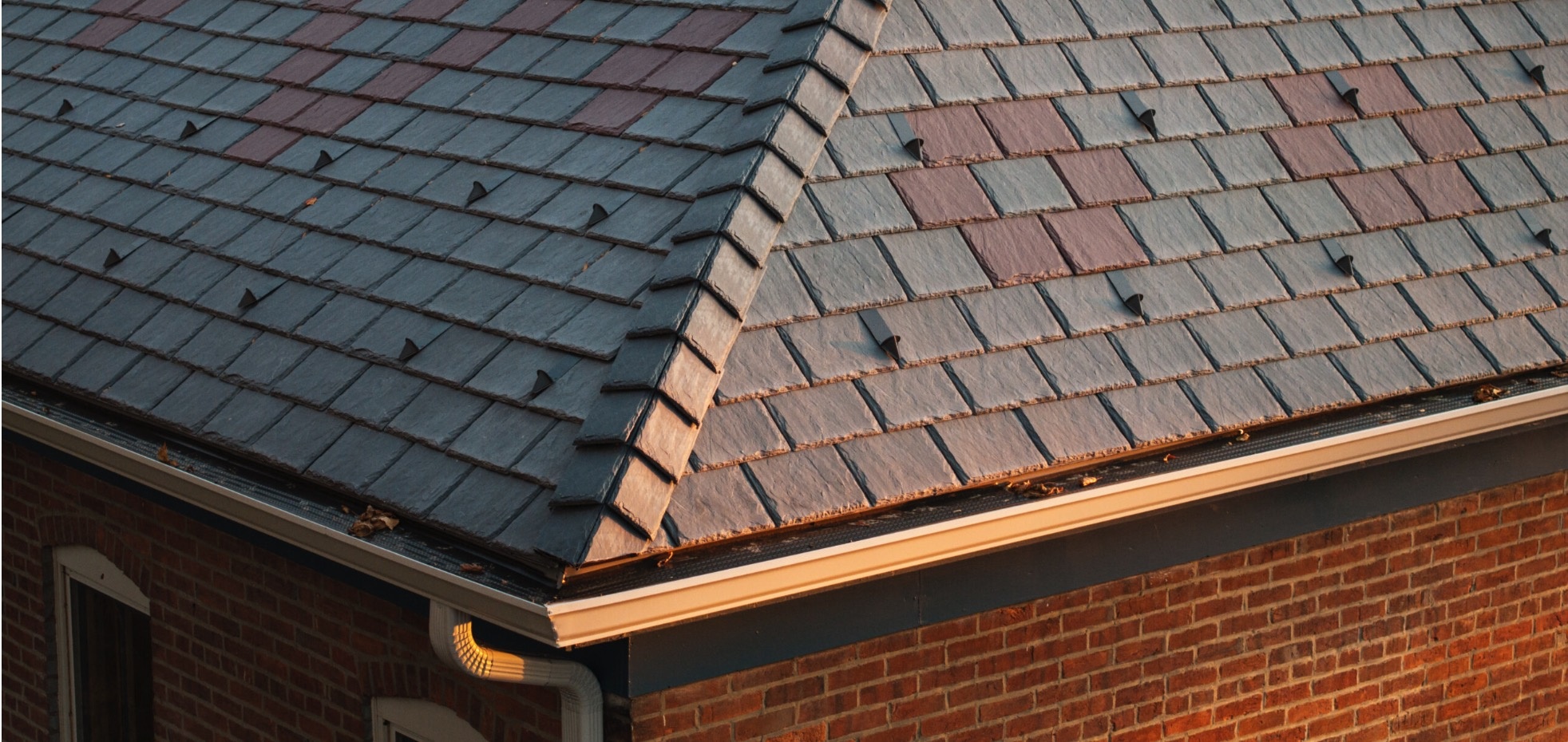
GUTTER Rx guard systemHeavy debris
Learn more
GUTTER Rx guard systemHeavy debris
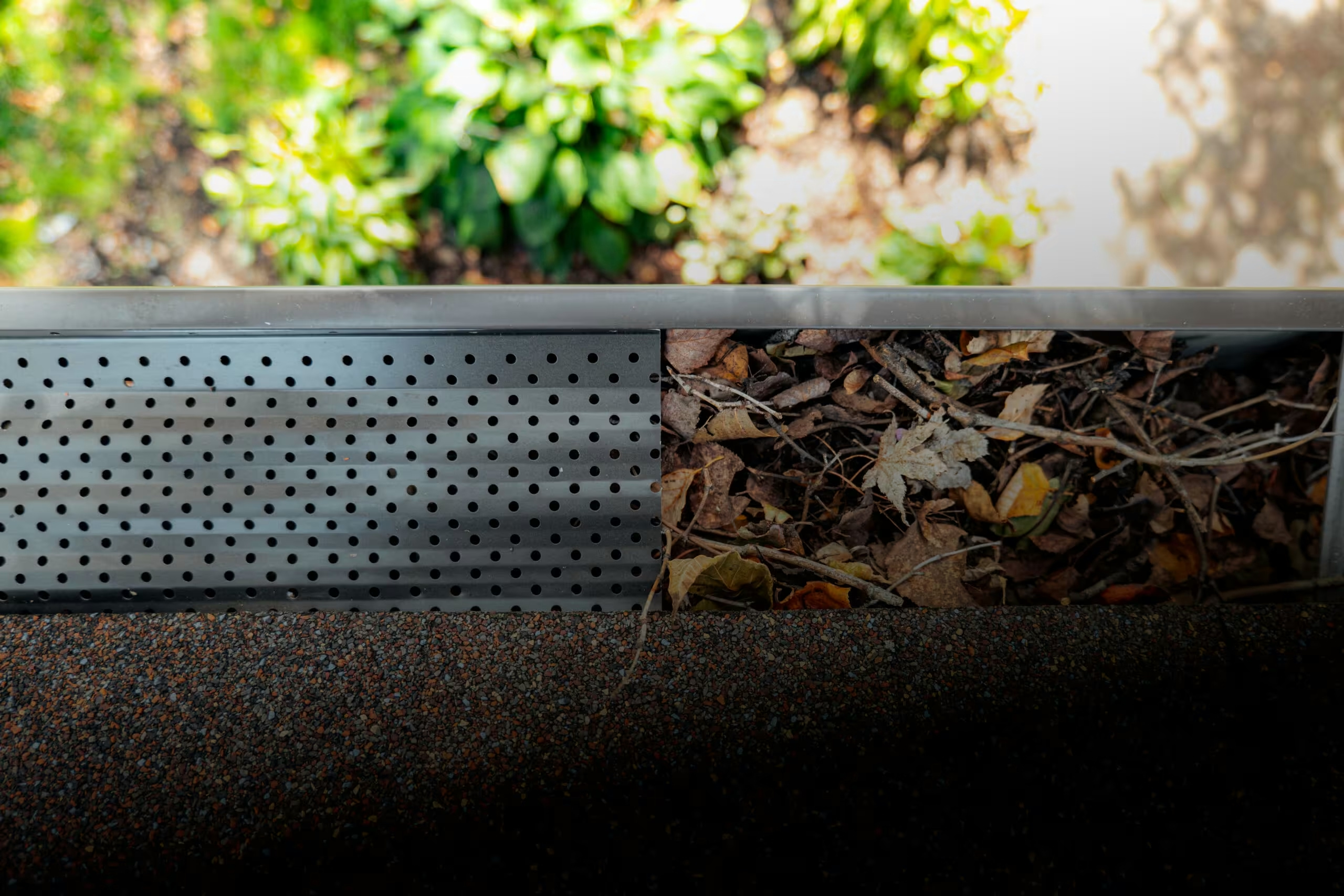
What is the GutterRx guard system?
GutterRx is a formed aluminum gutter-guard insert with a ribbed, perforated surface. It closes the top of the gutter so water can enter through the openings while leaves, seeds, needles, and larger debris remain above the trough.
Pros
The guard can reduce the volume of debris that enters the gutter and downspout. Its low profile is intended to remain difficult to see from the ground and is available for several gutter widths and profiles.
GutterRx is designed for new or existing gutters and does not need to extend under the roof shingles. That helps keep the guard installation separate from the shingle fastening and underlayment.
The manufacturer publishes a 20-year no-clog guarantee for properly installed systems. The exact product, installer requirements, registration, exclusions, and current warranty language should be included rather than summarized as “maintenance-free.”
Cons
A gutter guard does not increase the gutter’s hydraulic capacity, correct bad slope, add outlets, or reroute the discharge. Water can still overshoot at steep valleys or concentrated flow points if the roof and gutter system are not evaluated together.
Leaves and fine debris can collect on top of any guard. Pine needles, roof granules, pollen, ice, and seed pods vary by property, so the surface and outlets still need periodic inspection and safe cleaning access.
Warranty information appears to vary among current supplier materials. The proposal should identify the exact GutterRx profile and attach the warranty being offered on that installation.
GUTTER Rx guard system
Gutter-cover system selected for roofs with heavier debris loads. Its job is to reduce the leaves, needles, and roof debris entering the trough while still allowing runoff to reach it. A guard does not create capacity, correct a bad slope, or eliminate maintenance; roof pitch, valleys, outlet placement, and cleaning access still decide whether the system works.
 Learn more
Wilco Gutter Supply guardsK-style / half-round
Learn more
Wilco Gutter Supply guardsK-style / half-round
What are Wilco Gutter Supply guards?
Wilco Gutter Supply guards are a group of solid covers, perforated aluminum guards, screens, and profile-specific accessories supplied for K-style and half-round gutters. The name describes a product line, not one single guard design.
Pros
The product range allows the guard to be selected around the actual gutter profile, roof geometry, debris, finish, visibility, and budget. A broad label is useful only when it leads to a specific product choice.
Options include products intended for higher water flow, smaller debris, new or existing gutters, and multiple finishes. That flexibility can be valuable on homes with different roof and gutter conditions from one elevation to another.
A locally available supply line can make replacement sections, finish matching, and product documentation easier to obtain.
Cons
Different guard designs do not perform the same way. Hole size, screen area, attachment, pitch, roof interface, and access for cleaning all change how a guard handles water and debris.
“Wilco guard” is not a complete proposal description. The quote should name the exact product, material, profile, color, fastening method, warranty, and the gutters it will cover.
No guard removes all maintenance. Surface debris, fine material, outlets, valleys, ice, and downspouts still need inspection.
Wilco Gutter Supply guards
Guard products selected to match K-style or half-round gutter profiles, available finishes, roof geometry, and debris conditions. A guard is an accessory to the drainage system, not a universal cure for every water problem. The useful comparison is between the exact profile, finish, maintenance access, warranty, and installed cost—not simply whether the gutter has a cover.
 Learn more
Downspouts & water routingWhere water goes
Learn more
Downspouts & water routingWhere water goes
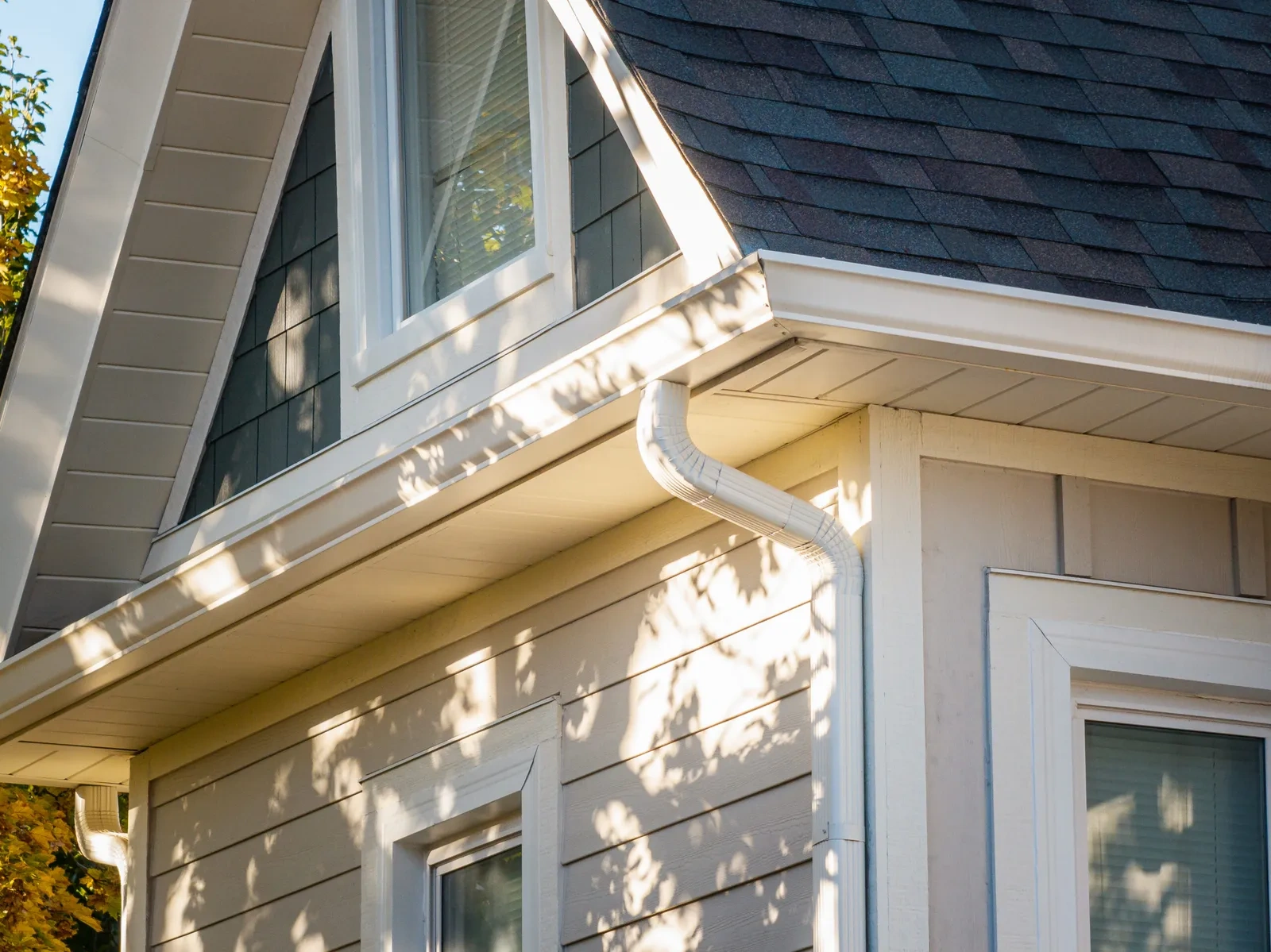
What are downspouts and water routing?
Downspouts and water routing are the parts of the drainage system that carry water from gutter outlets to a safe discharge point. The scope can include additional outlets, 3-by-4-inch downspouts, elbows, extensions, splash blocks, underground connections, and grading observations.
Pros
Larger or additional downspouts can relieve long gutter runs and concentrated valley flow. Outlet count and placement often matter as much as the size of the gutter itself.
Extensions and controlled discharge move roof water away from walls, entries, walks, landscaping, and foundations. The proposal can state where each downspout is intended to send the water instead of ending at “gutter installation.”
Visible routing also makes the system easier to inspect during a storm. Problems at elbows, outlets, seams, and discharge points can be found before they become concealed building damage.
Cons
A downspout that ends beside the foundation has not finished the job. Soil slope, splash, erosion, settlement, and the final discharge location must be evaluated.
Underground piping can clog, freeze, collapse, or discharge into an unsuitable location. Existing buried lines should not be assumed open or properly connected without investigation.
More downspouts improve capacity but affect the elevation. Locations need to coordinate with windows, doors, masonry, utilities, walks, and architectural trim.
downspouts & water routing (n.)
Vertical pipe system that carries collected roof water from the gutter to the ground, a drain, or a controlled discharge point. Downspout was recorded in 1829 as a pipe conveying rainwater from roof to ground or drain. Its size, outlet count, extensions, underground tie-ins, and final discharge path determine whether water actually leaves the building safely.
 Learn more
Fascia & soffit repairBehind the gutter
Learn more
Fascia & soffit repairBehind the gutter
What is fascia and soffit repair?
Fascia and soffit repair addresses the vertical roof-edge board that supports or backs the gutter and the finished underside of the eave. It may include damaged wood, loose panels, trim metal, ventilation openings, and the transitions behind the gutter.
Pros
Removing the gutter creates direct access to inspect the fascia. Repairing deteriorated material before the new gutter is installed gives hangers and fasteners a sound attachment.
Soffit work can correct loose or damaged panels and restore intended intake ventilation when the roof assembly uses a vented attic. Ventilation changes should be based on the complete intake-and-exhaust design.
Handling the roof edge, drip edge, fascia, soffit, and gutter together reduces the chance that one trade covers another trade’s unresolved water damage.
Cons
The full extent of damage may not be visible until the gutter and covering materials are removed. The proposal should explain how concealed deterioration will be documented and priced.
Replacing vented soffit without checking insulation blockage, baffles, exhaust area, and attic conditions may change appearance without correcting airflow.
Rot at the fascia can be a symptom of roof-edge leakage, ice, failed flashing, or chronic overflow. New boards and gutters will not last if the original water path remains.
fascia & soffit repair (n.)
Repair of the eave components behind and beneath the gutter line. Fascia is the vertical finishing band at the roof edge, while soffit is the finished underside of the overhang. Because gutters fasten at the fascia, damaged boards, separated soffit panels, and failed ventilation are part of the drainage scope, not unrelated cosmetic work.

FAQ
Send photos of the gutters today, any drip lines or splash damage at the foundation, the trees over the roof, and where overflow appears in a hard rain. That gives us a starting point before field measurements determine gutter size, outlets, downspout routing, and whether a guard fits.
Real gutter clients
 Verified Google reviews
These reviews document gutter installation, cleanup, project communication, and the people involved.
“They also replaced our gutters and did a great job on that as well. Their roofing and gutter crews did a great job. Also both crews did a awesome job of cleaning up after their installation. My wife and I highly recommend them. Honest and trustworthy.”
“The team with Lock and Ladder really made our roof and gutter replacement simple. Dan has walked us through every step from inspection to completion and always available for any question we have, big or small! Dan also made the insurance process easy and understandable.”
“The Locke and Ladder team was punctual, and provided clean professional service to the standards you would expect when having your home redone. We now have a very beautiful home with quality materials and workmanship that I know Jon, and the team stand behind.”