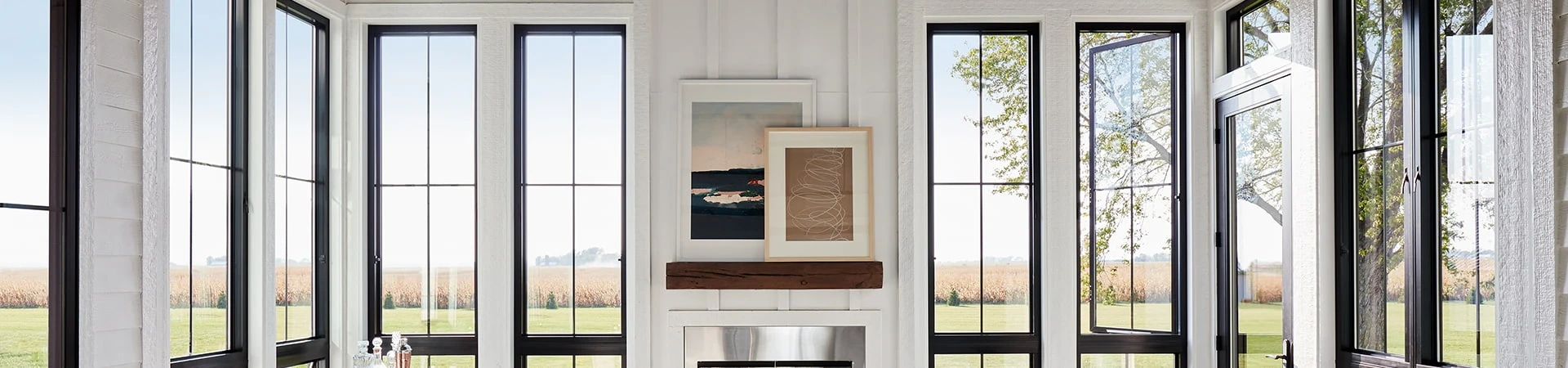
Choose the frame material after documenting the opening. Frame condition, water path, trim, architecture, whole-unit ratings, maintenance, and budget can rule a material in or out before the brand discussion begins.
Hidden rot, failed flashing, or an out-of-square frame can also change the installation from an insert to a full-frame replacement. A better material does not correct a damaged opening.
The opening tells the truth
Before comparing frame materials, inspect the sill, casing, trim, and water path. A sound frame may support an insert; rot, staining, failed flashing, or poor geometry can require full-frame replacement. See the full insert-versus-full-frame decision guide.
Wood vs fiberglass vs vinyl
| Material | Best for | Watch-out | Locke & Ladder take |
|---|---|---|---|
| Wood | Historic homes, stained interiors, divided-lite character, warm interior trim. | Maintenance, exposure, lead times, and higher project cost. | Use it when the interior finish and architecture justify the maintenance and price. |
| Fiberglass | Dark exterior colors, large openings, strong performance, refined modern-classic elevations. | More expensive than vinyl, and the profile still has to match the architecture. | Compare the exact frame profile, color limitations, whole-unit ratings, and warranty; do not buy the category name. |
| Vinyl | Efficiency, budget control, low maintenance, whole-home replacement where the profile works. | Bulky frames, limited color range in some lines, and a cheaper read on the wrong facade. | Judge the exact line by frame width, ratings, finish options, warranty, and installed scope. |
What the sticker actually tells you
The National Fenestration Rating Council label provides whole-product ratings that let you compare windows without relying on sales language. ENERGY STAR certification uses NFRC-certified ratings to identify products that meet its current climate-zone requirements.
- U-factor: lower is better for resisting heat transfer. In Indiana and Illinois, that matters in both winter drafts and summer conditioning.
- SHGC: solar heat gain coefficient. Lower numbers reduce unwanted heat from sun exposure, which matters on west-facing rooms and glass-heavy elevations.
- Air leakage: a product comparison point that directly affects drafts and comfort.
- Visible transmittance: how much daylight comes through. Slimmer profiles and the right glass package can change how a room feels.
- Condensation resistance: worth asking about when comfort, humidity, and cold-weather performance matter.
The label compares products; it does not describe the opening preparation. The U.S. Department of Energy's residential-window guidance explains how panes, Low-E coatings, gas fills, and frame materials affect energy performance. Flashing and air sealing still have to match the wall and the manufacturer's installation instructions.
The glass package may matter more than the frame
Frame material gets the debate, but the glass package can change U-factor, solar heat gain, daylight, glare, and sound performance. Compare pane count, Low-E coating, gas fill, spacer, glass area, room exposure, and any tested sound rating for the exact unit.
Evaluate the glass package and installation method together. A frame-material label alone does not predict comfort in a specific room.
Cost drivers: compare the installed scope
The range moves with more than material. Insert versus full-frame, opening size, specialty shapes, grille patterns, interior trim, exterior cladding repair, glass package, number of openings, access, and discovery work all change the number. That is why a one-window price and a whole-home window project are not the same math.
Our project price guide lists windows and doors at a typical project price of $20,000, with most projects falling between $8,000 and $35,000. Typical window pricing starts around $1,700 per opening; the project total still depends on the window type, opening count, and scope. See the Project Price Guide.
Questions to ask before you sign
- Are we quoting insert replacement or full-frame replacement?
- What happens if rot or water damage is found after the trim comes off?
- Are the U-factor and SHGC whole-unit numbers or center-of-glass numbers?
- What glass package are we actually buying?
- How will the opening be flashed, insulated, and air sealed?
- Will the exterior profile match the rest of the home?
- Who handles interior trim, touch-up, and cleanup?
- What does the warranty exclude if the installation is wrong?
Our recommendation
Do not choose the frame material by status. Choose wood when its finish and architectural character justify the maintenance; fiberglass when its profile and product specifications fit the opening; and vinyl when its profile, performance data, and price fit the project. Then judge the glass, installation method, trim, and water management with the same care.