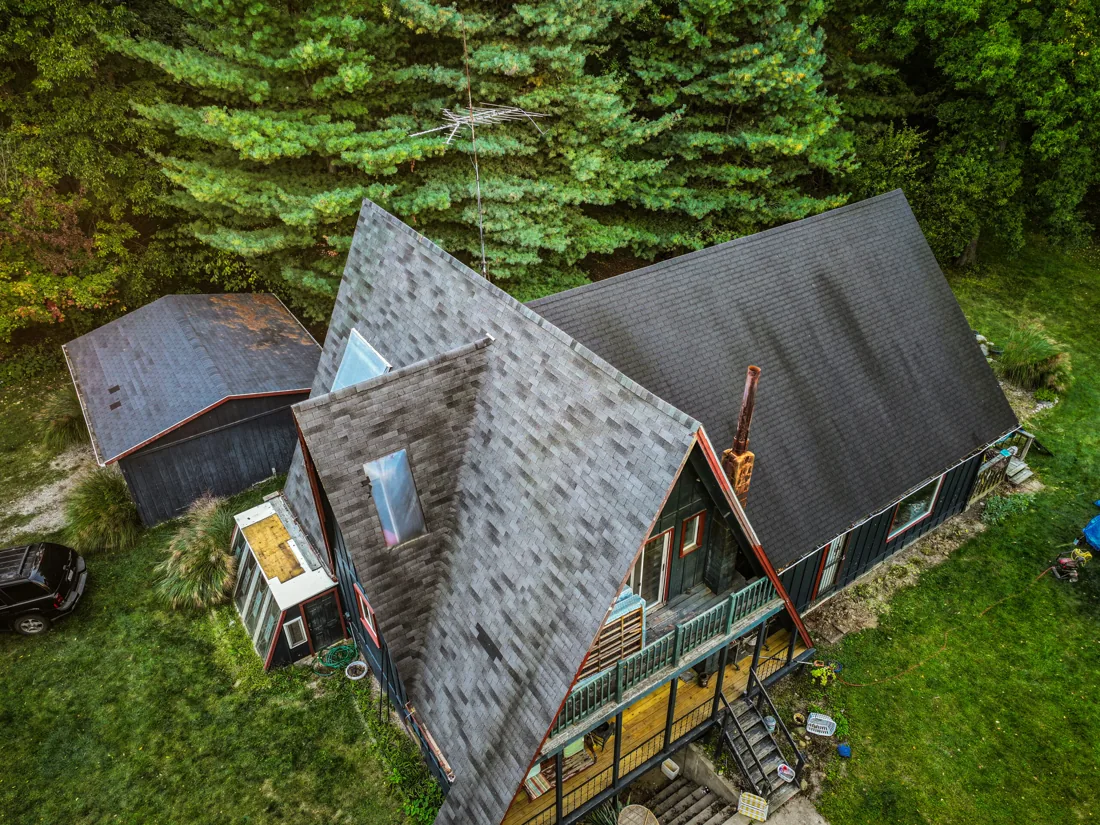

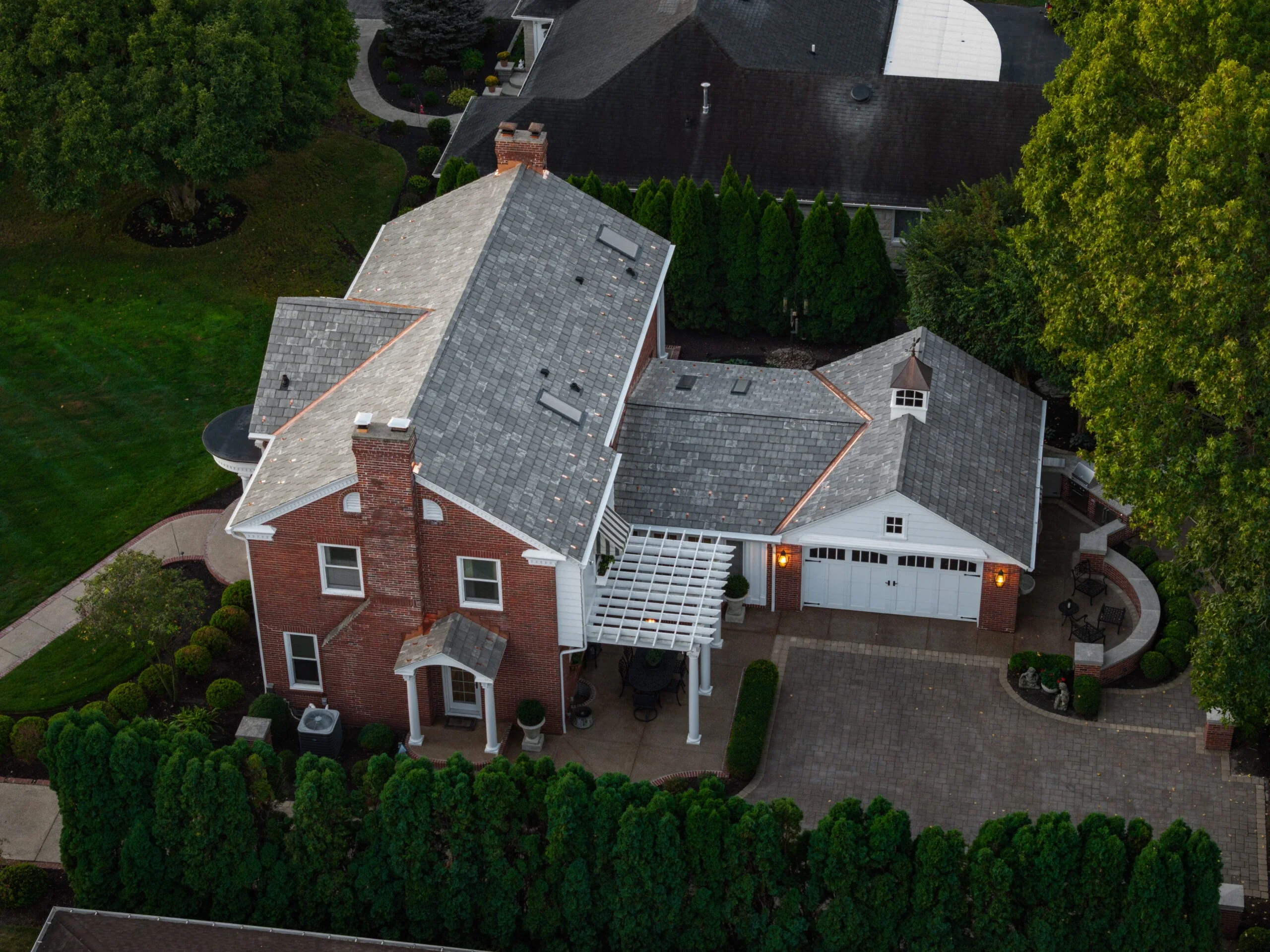
Overhead view of a finished roof system showing field shingles, valleys, hips, and ridges

Learning Center · Roofing

The roof system, layer by layer.

A set of parts working together as one mechanism. Every layer has a job, and none of them can rescue a careless detail somewhere else.

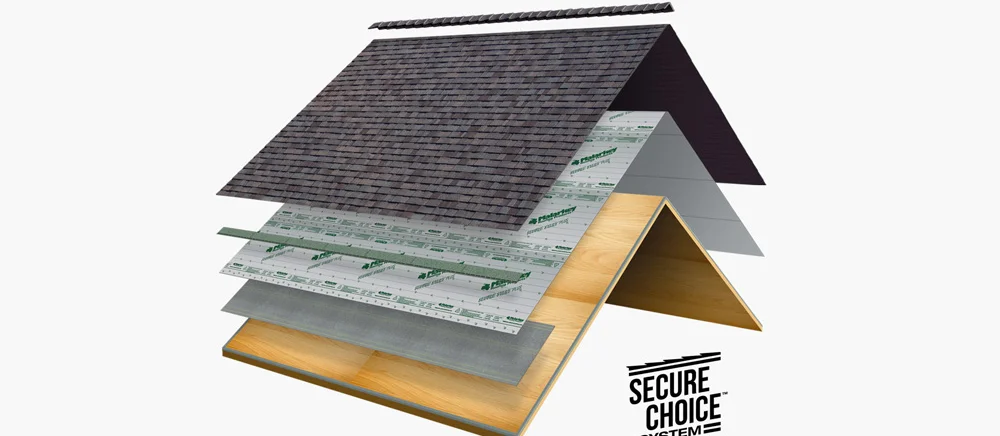
Exploded illustration of a complete polymer-modified asphalt roof system
Deck to ridge: six layers, one water-shedding assembly.
Exposed structural roof decking during an active roof project
01

Decking

Decking provides the main support for the complete roof assembly. It has to be sound, dry, correctly fastened, and free of rot or soft spots before new roofing covers it.

Today that support is commonly built with 4-by-8-foot OSB panels. The deck distributes the roof load into the framing and gives the layers above a continuous fastening surface.
Open copper roof valley showing a critical water-routing area before adjacent roof courses are complete
02

Ice & water shield

Ice and water shield is a self-adhering membrane that protects the most vulnerable water paths: eaves, valleys, walls, chimneys, penetrations, and low-slope transitions.

It is a second line of defense against ice dams and wind-driven rain. Placement has to follow the roof geometry, local code, and the finished material manufacturer’s assembly.

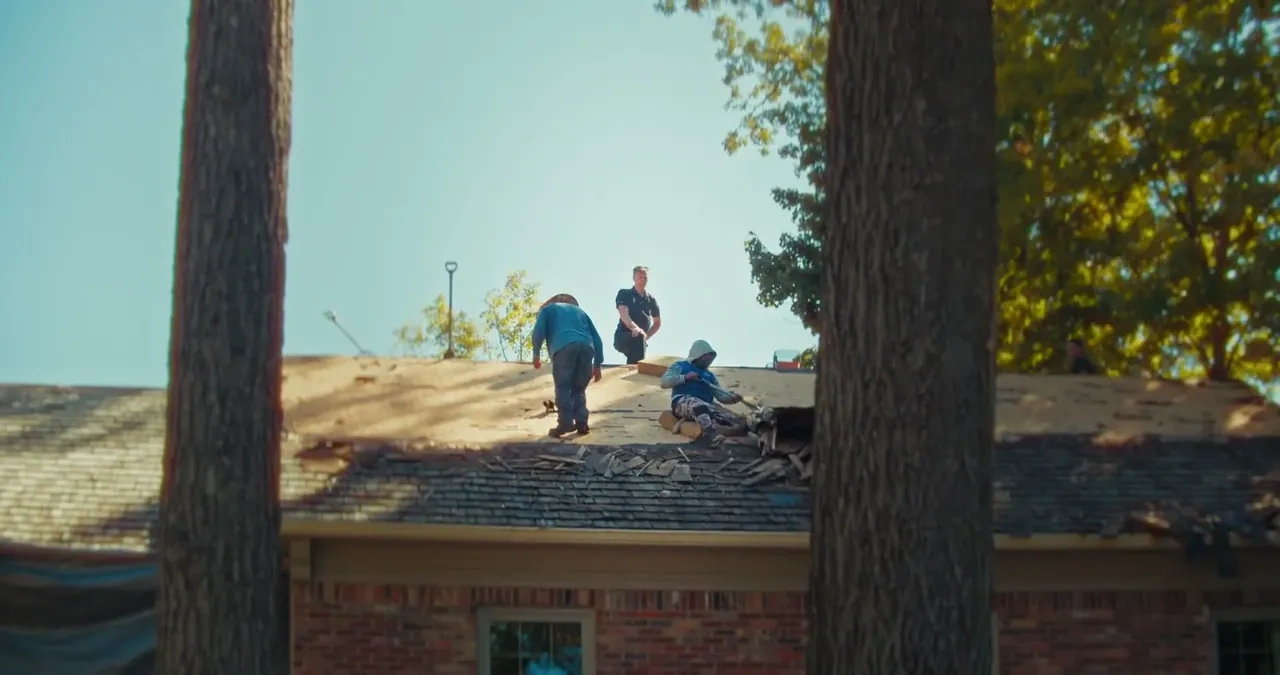
Roofing crew installing a coordinated roof assembly in the field
03

Synthetic underlayment

Underlayment covers the deck before the finished roof material. It provides a secondary drainage plane if moisture reaches below shingles, tile, or metal.

Synthetic underlayments resist tearing, puncturing, and short-term ultraviolet exposure better than traditional felt. The exact product still has to match the roof material and manufacturer instructions.

Existing roof edges before replacement, where starter courses and perimeter protection begin
04

Starter shingles

Starter strips begin at the eaves and rakes. They establish alignment, create the first sealed edge, resist wind uplift, and support the first full course of field shingles.

A complete specification names the starter product. Cutting a generic field shingle into a substitute can compromise the seal line and the approved assembly.

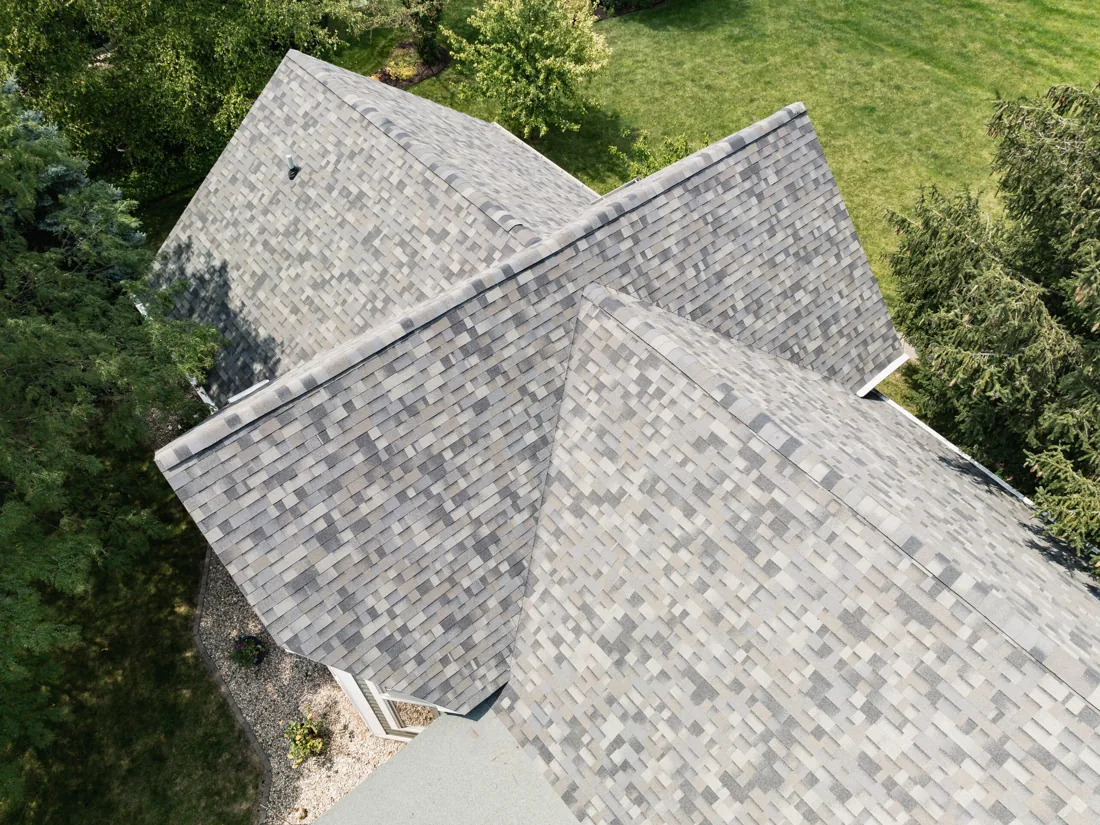
Finished polymer-modified asphalt field shingles viewed directly overhead
05

Field shingles

Field shingles are the visible armor across the roof planes. They shed rain, snow, and wind while supplying most of the roof’s color, pattern, and street-facing character.

Impact classification, fastening, exposure, layout, valley treatment, and ventilation all matter. The shingle name alone is not the roof system.

Completed architectural roof with finished hip and ridge lines
06

Hip & ridge shingles

Hip and ridge shingles finish the lines where roof planes meet. They are formed for those transitions, where ordinary field shingles would not bend or seal correctly.

The ridge is the horizontal meeting line near the roof peak. Hips run diagonally from the eaves toward that peak. Both need material and fastening designed for their shape and wind exposure.

Next step

Specify the whole assembly.

A roof proposal should name the layers, flashings, ventilation, accessories, supervision, and responsibility for changes—not just the visible material.