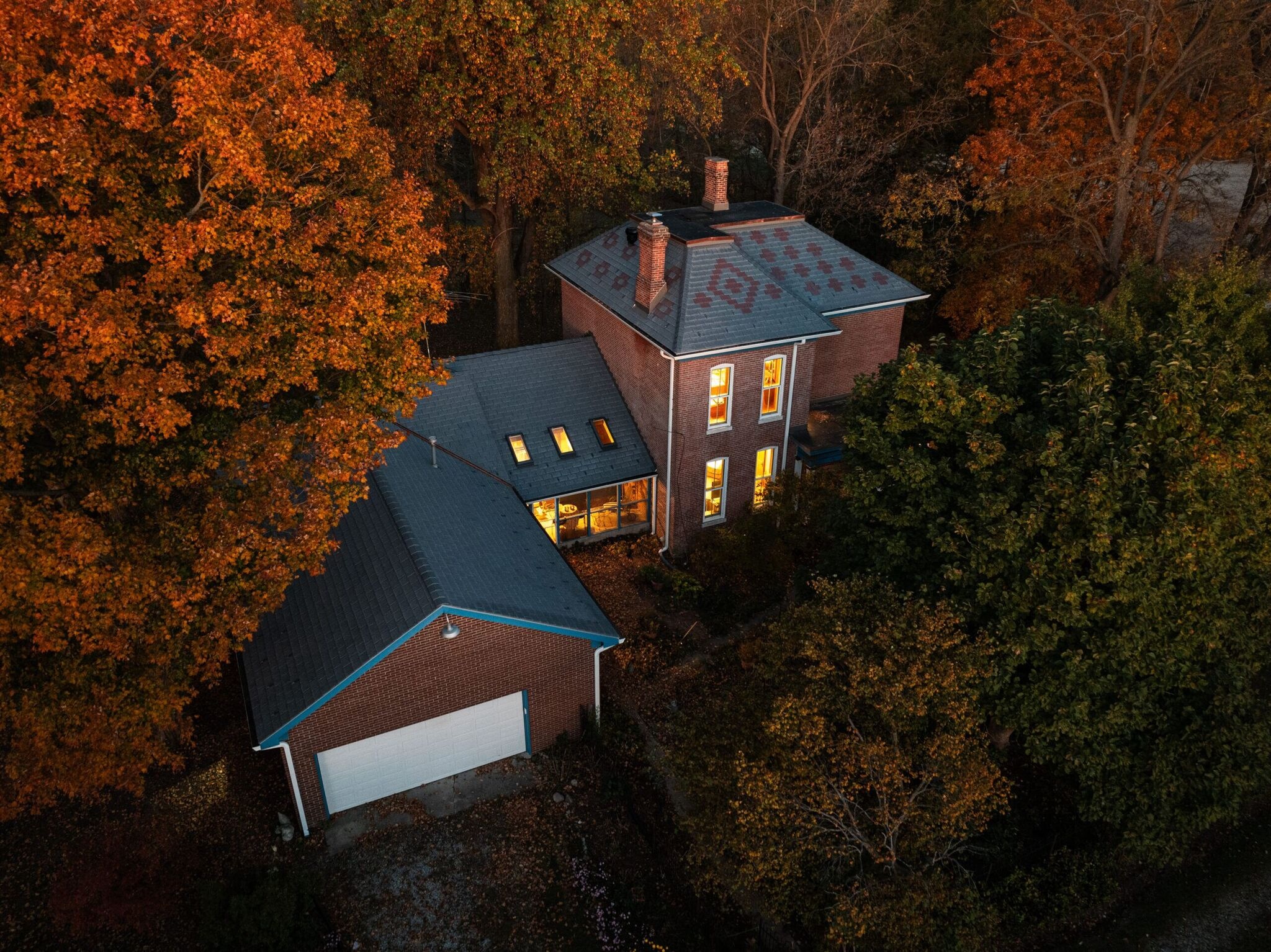
Hail doesn't break a good roof evenly. It finds the weakest decision on it — the builder-grade pipe boot, the thin aluminum vent, the shingle already past its granules — and starts there.
For a storm-exposed Indiana home, the answer to "best roof for hail" cannot stop at the shingle name. The tested material, roof details, installation, warranty terms, budget, and tolerance for cosmetic damage all matter.
Class 4 is a starting point, not a forecast
UL 2218 Class 4 reports the result of a standardized impact test. It does not promise how a complete roof will age or what a particular storm will do. Our founder, Jon Strand, makes a separate field judgment in his composite-slate video:
A lot of companies just make a thicker shingle that's Class 4 the day it leaves the factory, and as soon as it gets brittle on your roof, real hail is a different story. The only products we're seeing that stay truly Class 4 are polymer-modified shingles and complete polymer composite tiles.Jon Strand · Founder
Treat that quote as Jon’s field observation, not an extension of the lab rating. Use Class 4 to narrow the list, then compare the tested assembly, installation details, warranty exclusions, and how each material handles cosmetic damage.
What fails first, in the order we see it
When we inspect a roof after a storm, we look beyond the field shingle and check these vulnerable details first:
- Soft aluminum and plastic vents dent, split, or crack.
- The rubber on standard pipe boots is often already sun-rotted; hail finishes it.
- Over-exposed ridge caps crack along the line where they were stretched too thin.
- Face-nailed valley metal oil-cans and opens at the fastener.
Material choice does not rescue weak details. Two homes with the same field material can perform differently when vents, boots, caps, valleys, and fasteners were specified and installed differently.
Matching product names do not mean matching roof assemblies. Deck attachment, edges, flashing, penetrations, and installation method still differ.
The three roofs we'd actually put on a storm-exposed home
Impact-resistant or polymer-modified asphalt. This is the controlled-cost starting point for many Indiana homes. Compare the exact product’s current impact classification, assembly requirements, wind coverage, and installation details instead of assuming every architectural shingle performs alike.
Standing seam metal, done right. Concealed-fastener standing seam and snap-lock systems avoid the exposed screws and washers Jon criticizes in his metal-roofing video. The tradeoffs belong in the decision too: price, roof geometry, snow retention, sound expectations, finish, and possible cosmetic denting.
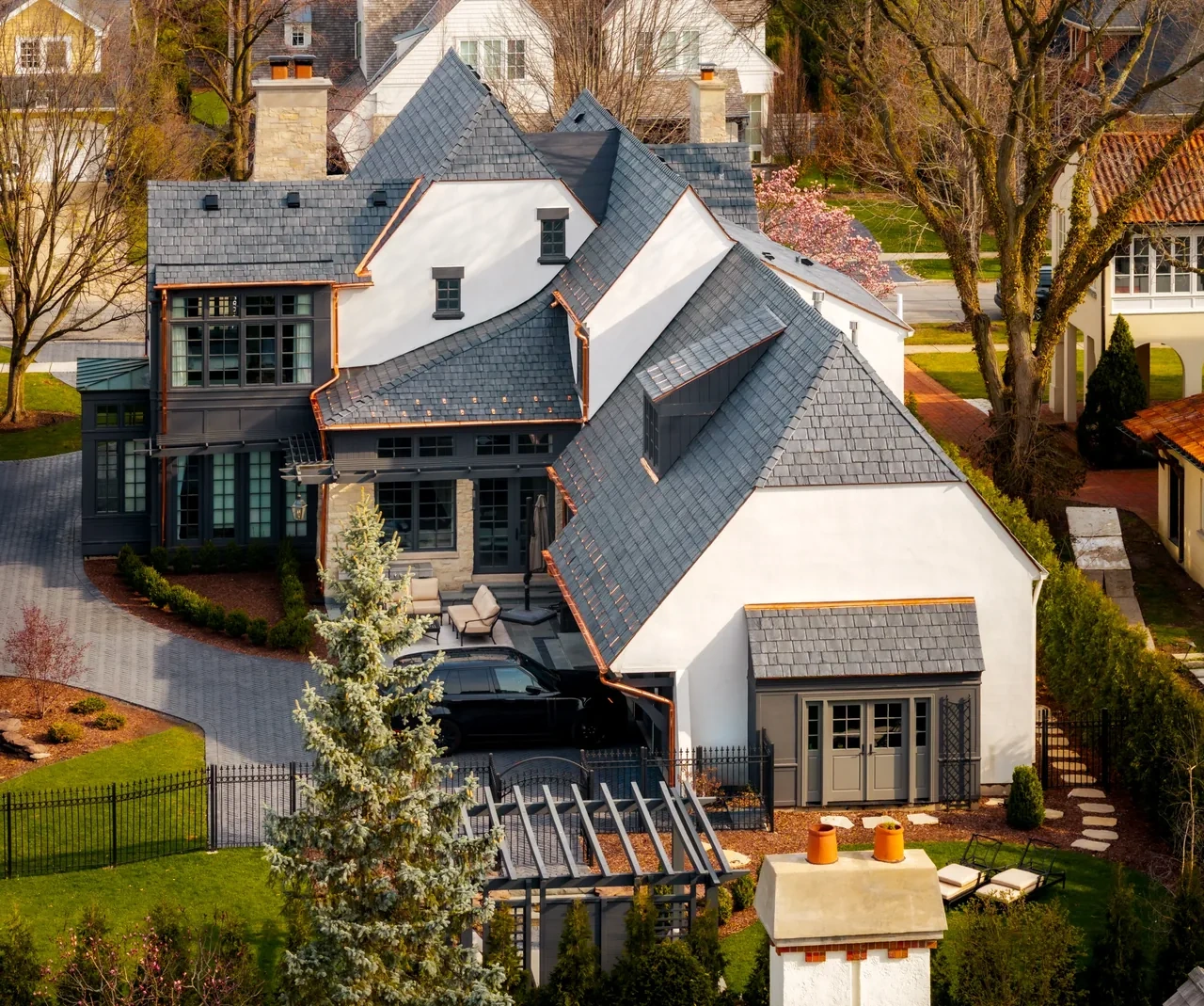
Composite slate or synthetic cedar. Brava and DaVinci publish Class 4 options with slate or cedar character. Jon’s comparison favors Brava’s deeper texture and wider reveal for some homes while noting DaVinci’s broader color range. The installer still has to follow the selected product’s current manual and warranty. On a documented East Hinsdale Brava slate project, the scope paired ice-and-water membrane with copper W-valleys and used a separate modified-bitumen assembly on low-slope sections; that system detail matters regardless of profile.
A warranty cannot compensate for an out-of-spec install.
Homeowners ask Jon what he thinks of composite-roof warranties. His blunt answer in the video is, "I think they're both garbage." His point is that warranty coverage and installation requirements are narrower than the headline. Read the current manufacturer warranty and installation manual for the exact product, then make the proposal name who owns compliance.
The real battle is 'was it put in right': the contractor says yes, the manufacturer says no. So I can't stress enough: you need a contractor who installs exactly to the protocols, cuts no corners, and uses all the right materials, so you never have to fight that battle.Jon Strand · Founder
A hail warranty is not the roof assembly. A highly rated tile cut wrong at the valleys or set over bad penetrations can still admit water, leaving the homeowner to document whether the product or the installation failed.
The cost reality, so a storm-chaser can't exploit it
Post-storm bids are only comparable when the scope is comparable. Our Project Price Guide publishes typical project prices and ranges for seven categories. A Class 4 roof may affect some policies, but discounts and eligibility vary by carrier and product; confirm any savings with your insurer before using it in the budget.
A buyer's checklist for storm country
Ask any contractor — including us:
- What exact product and impact classification are you proposing? Ask for the current product document and the installation details required to use it as tested.
- What is your underlayment and ice-and-water plan, and where does the shield go?
- Are you reusing the old pipe boots and vents, or replacing them with something that survives impact?
- How are valleys handled — rebuilt metal, or face-nailed stock?
- Who supervises the install, and how is the finished work documented?
If the answers are about the shingle and nothing else, you're buying a lab rating, not a storm-ready roof.
If you've already taken a hit
A post-storm inspection should come with photos of the actual failure points, a written scope, and a plan that addresses the water pathway — not a clipboard and a pressure pitch in your driveway the afternoon after a storm. Get the damage documented properly and decide from there.